
When to Extract
Extractions are indicated when stage IV periodontal illness is current (the tooth has greater than 50% help loss based mostly on probing depths, better than stage III mobility, stage III furcation publicity, or when the gingival recession has progressed previous the mucogingival line). Extraction can be the very best remedy for stage III periodontal illness, the place the tooth has 25% to 50% help loss, and the proprietor or affected person is not going to permit acceptable residence care.
Some fractured tooth are greatest extracted, particularly these with pulp publicity plus stage III or IV periodontal illness, marked inner resorption, or when root canal remedy is not possible due to the proprietor’s needs or the apply’s functionality and lack of referral choice.
Extractions are additionally indicated to deal with tooth resorptions uncovered to the oral cavity. Moreover, cats affected by feline persistent stomatitis may be helped via extraction of selective tooth or all of the tooth.
Supernumerary tooth that trigger crowding, predisposing the tooth to periodontal illness, ought to be extracted. Moreover, persistent deciduous tooth ought to be eliminated as quickly as attainable on the time of analysis to stop the possibly dangerous malposition of the grownup tooth.
Problems of routine extractions
Take into account why issues sometimes happen throughout extractions:
- Extreme stress on the crown/ root interface results in a root fracture.
- Extreme bleeding secondary to inadvertently excising neurovascular bundles happens in the course of the elimination of buccal alveolus, creating improved publicity.
- Mandibular jaw separations are brought on by extreme stress on bone weakened by apical periodontitis.
Luckily, these issues may be mitigated by first performing crown amputations.
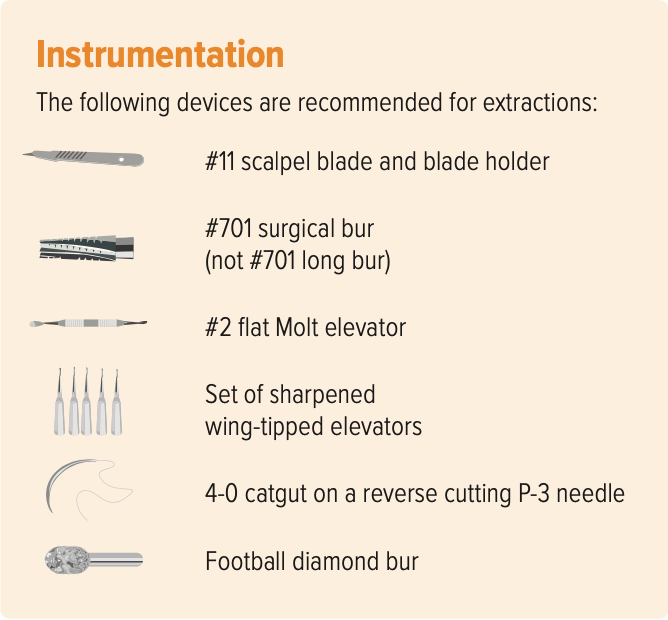
Operative approach
- Administer native anesthesia.
- Insert the scalpel blade into the gingival sulcus and advance it apically 360 levels to incise the coronal periodontal ligament.
- Create a buccal full-thickness mucoperiosteal envelope or pedicle flap, together with the floor mucosa, submucosa, and periosteum.
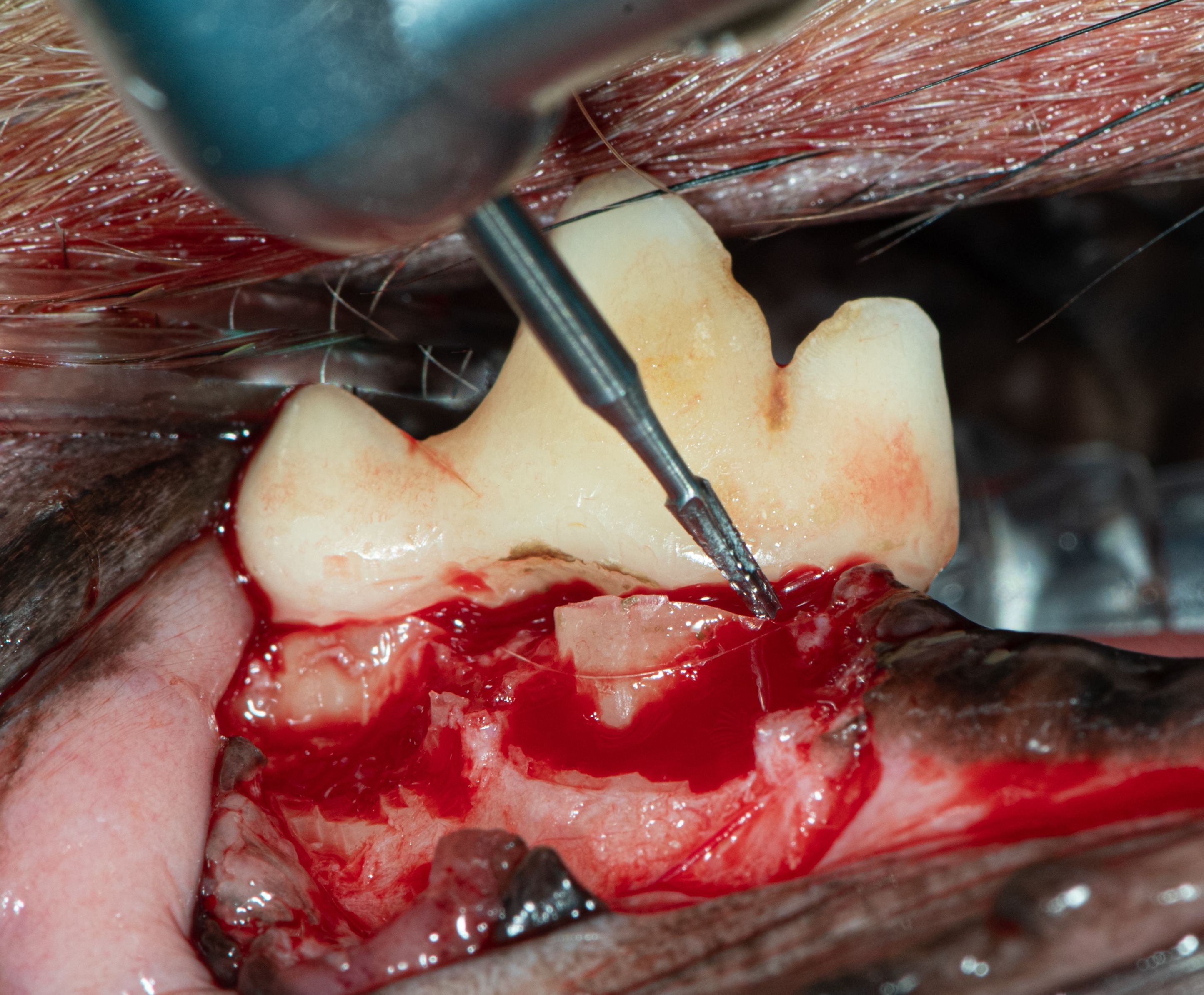
- Use a #701 surgical tapered crosscut fissure bur to create a gutter of bone apical to the cementoenamel junction.
- Place the bur horizontally on the cementoenamel junction to take away the crown.
A #701 Surgical bur used to groove the precise mandibular first molar crown.
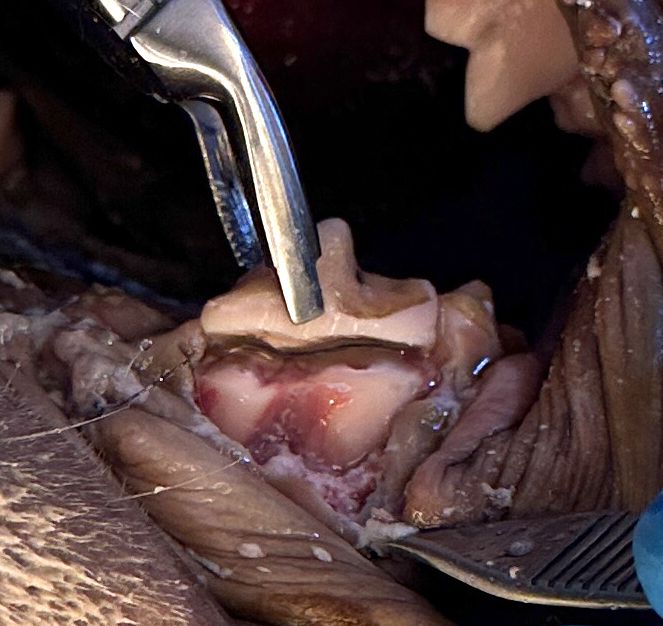
6. Elevate the crown gently off the roots utilizing extraction forceps.
Rongeurs used to lift the precise maxillary fourth premolar crown from the underlying roots in a cadaver specimen.
7. Use the #701 surgical tapered crosscut fissure bur to create a moat across the root(s) to facilitate the insertion of the sharpened wing-tipped elevator blade.
Determine A: The maxillary fourth premolar in a cadaver specimen exposing the roots after crown elimination.
Determine B: The looks of the mandibular first molar roots after crown amputation.
Determine C: A #701 Surgical bur used to create moats across the canine roots in a cadaver specimen.
Determine D: A #701 Surgical bur used to create a trench across the maxillary fourth premolar in a cadaver specimen.
8. Take away enough buccal alveolar bone to show the basis floor.
Determine A: A #701S bur used to take away buccal alveolar bone overlying the mandibular first molar roots.
Determine B: Making a moat for straightforward wing tip insertion for a maxillary canine tooth in a cadaver specimen.
9. Apply reasonable torsion with an appropriate-sized wing-tipped elevator circumferentially till marked root mobility is created.
A wing tipped elevator positioned into the moat to facilitate canine root extraction in a cadaver specimen.
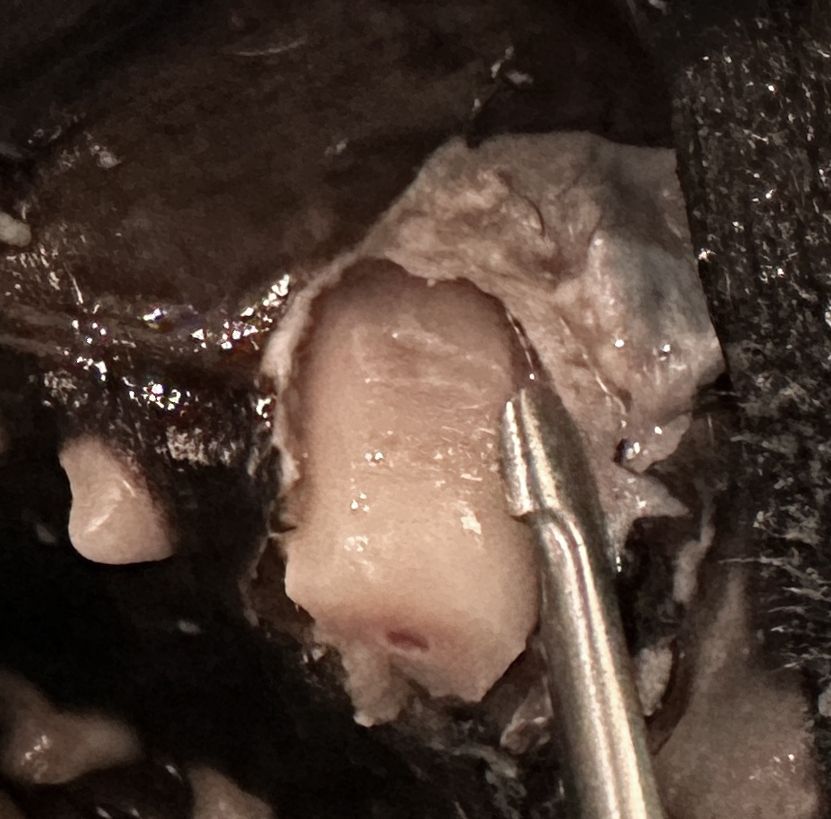
10. Take away the roots with a root toothtip decide or fantastic extraction forceps.
Supply of the maxillary canine root is proven.
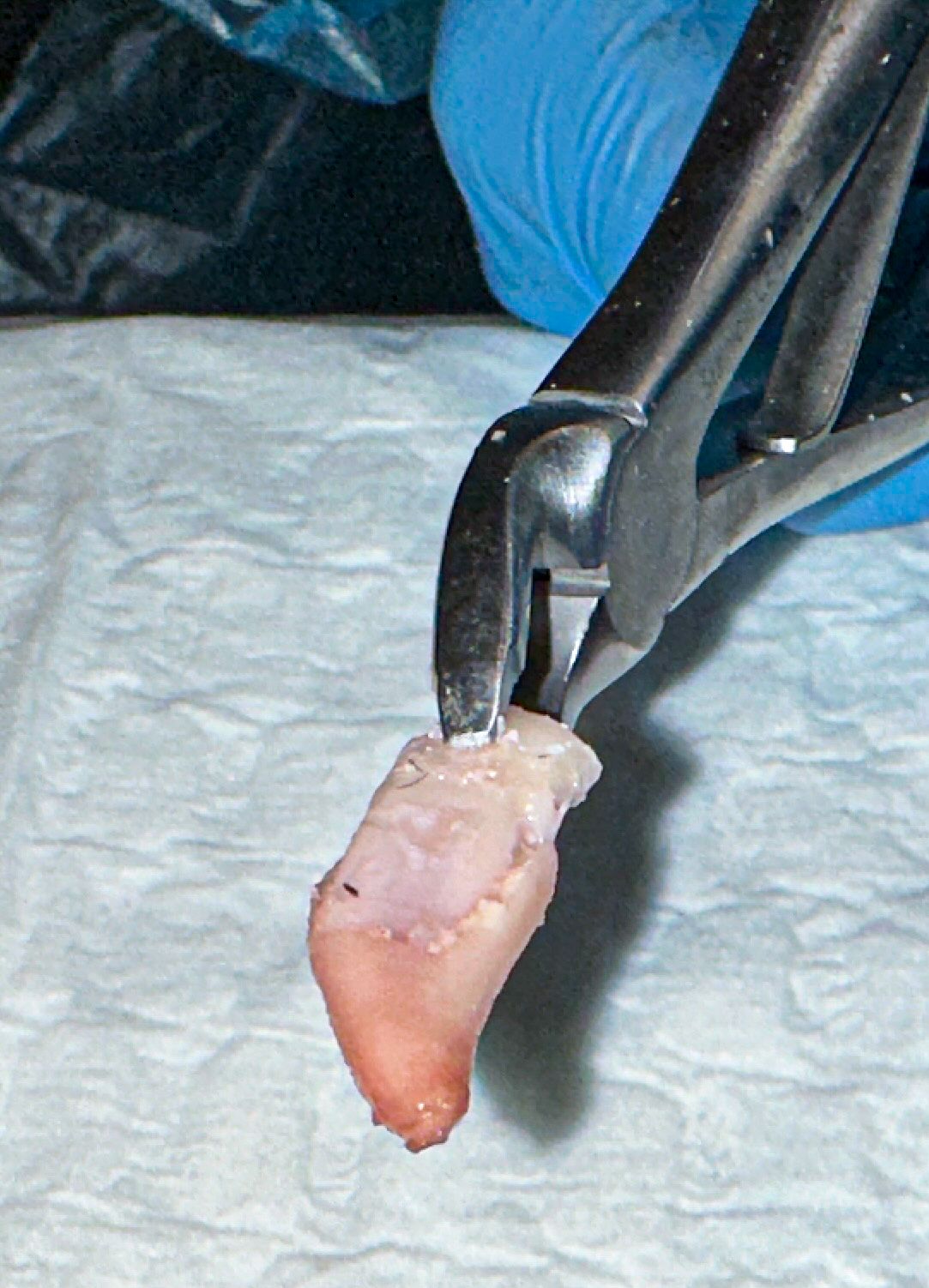
11. Clear the sharp alveolar crest with the soccer diamond bur earlier than suturing.
12. Enlarge the flap if wanted to facilitate tension-free closure.
Key takeaway
Eradicating the crown as a part of the extraction course of is a win for all. It decreases the flap measurement wanted to entry the buccal alveolus, permits wonderful visualization of the roots, decreases hemorrhage from inadvertently incising arterial provide, and reduces root fracture throughout extraction and stress.
Magnificence is an efficient factor.
Jan Bellows, DVM, DAVDC, DABVP, FAVD, obtained his undergraduate coaching on the College of Florida and his doctorate in veterinary medication from Auburn College. After finishing an internship on the Animal Medical Middle in New York, New York, he returned to Florida, the place he practices companion animal medication surgical procedure and dentistry at All Pets Dental in Weston. He has been licensed by the American Board of Veterinary Practitioners (canine and feline) since 1986 and the American Veterinary Dental School (AVDC) since 1990. He was president of the AVDC from 2012 to 2014 and is president of the Basis for Veterinary Dentistry.