
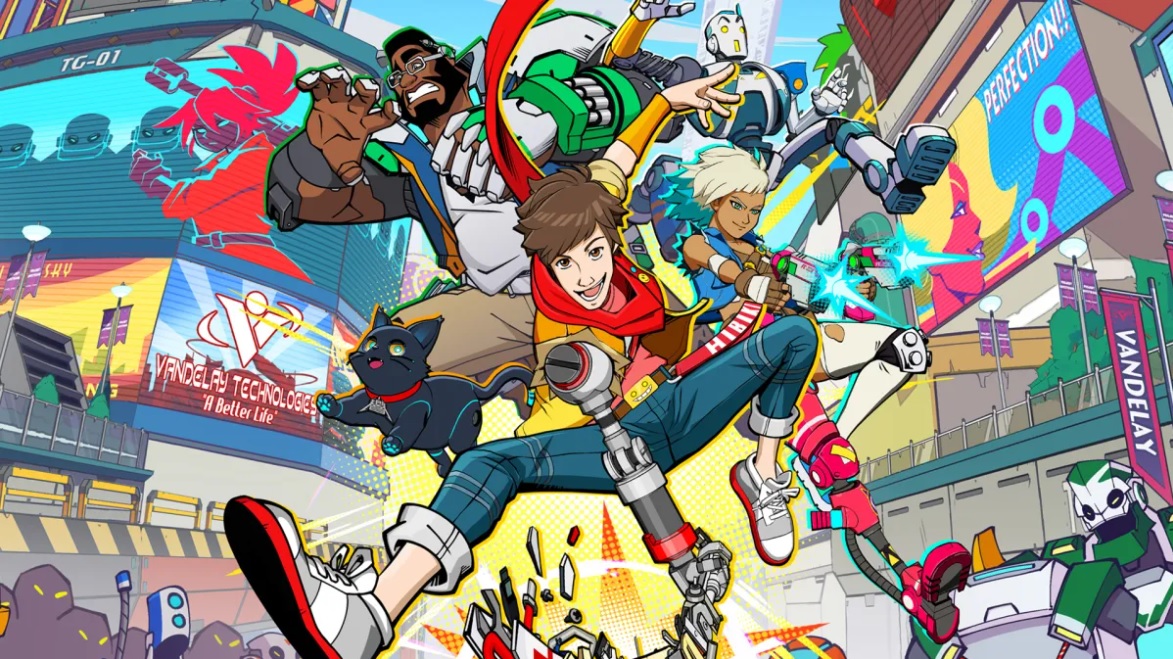
“Hello-Fi Rush cracks the rhythm-action style vast open to ship Tango Gameworks’ most assured, trendy, and stunning mission to this point.”
Professionals
- Rebellious spirit
- Implausible musical fight
- Playful makes use of of rhythm
- Fashionable visuals
- Efficient soundtrack
As I battle my manner via waves of robots in Hello-Fi Rush, stylishly slashing them with my guitar in time with an lively music monitor, I abruptly flash again to an Instagram reel.
Final yr, the app’s unknowable algorithm briefly determined that it ought to solely serve me reels from music lecturers (a passive-aggressive transfer, should you ask this self-taught guitarist). For a couple of weeks, all of them seemingly latched onto the identical development as they put out fast movies highlighting the distinction between beat and rhythm, two particular phrases that get mistakenly interchanged with each other. In a single clip I finished to look at, the trainer begins by stating a tune’s beat, steadily tapping out its tempo like a metronome. Then, she switches over to the rhythm, replicating the precise sample of notes that weave round that tempo.
Whereas some music video games might stand to be taught a factor from that video, Hello-Fi Rush is a mannequin scholar. Tango Gameworks’ rhythm-action sport, which surprise-launched on PC and Xbox final week, doesn’t simply throw gamers a very good playlist and ask them to maintain time over it. Reasonably, every part about it’s constructed round that music, like a band naturally locking in after a drummer’s opening count-in. Regular beats function an invisible drive that powers its vibrant cyberpunk world, however I can hardly really feel that restriction in a musical quest that performs like a inventive improv session.
Hello-Fi Rush rockets to the highest of the rhythm-action style due to a stellar fight system that goes far past easy beat-matching. It has all of the model of an anime, the long-lost inventive vitality of a GameCube sport, and the bright-eyed exuberance of a 2000s teen at their first indie rock present. It’s the uncommon main studio sport that breaks free from the monotony of a stagnating medium to ship one thing that really, earnestly rocks.
Placing the punk in cyberpunk
Narratively, Hello-Fi Rush is a cyberpunk sport wrapped up in cartoon aesthetics. Set in a metropolis run by an oppressive megacorporation, the story focuses on a employee named Chai who’s deemed faulty after having a music participant fused to his chest. That kicks off an alt-rock-fueled journey to take down the corporate’s high brass with the assistance of some allies and a metallic guitar blade.
Hello-Fi Rush itself looks like a rejection of the capitalistic restrictions that main studios like Tango Gameworks typically face.
Although its story could be a bit “anti-capitalism 101” at instances — and loaded with the identical quippy humor that plagues video games like Forspoken — a lot of its narrative selections work within the context of its gentle aesthetic. Biting satire is baked into its colourful world, because it makes some heavy themes extra digestible for a spread of age teams. The dystopia is crammed with company propaganda posters and lore logs that paint an image of the world’s exploited working class by way of loaded gags. Certainly one of my favourite textual content logs is a poem written by a upkeep robotic pressured to ceaselessly clear firm flooring that by no means get soiled. It’s a message that feels particularly related to the yr it’s releasing in, because the gaming business inches nearer to mass unionization.
That theme isn’t simply mirrored in its story. Hello-Fi Rush itself looks like a rejection of the capitalistic restrictions that main studios like Tango Gameworks typically face. It’s not a run-of-the-mill AAA sport that includes an expansive open world and obsessive hooks meant to maintain customers logging in (one might argue that Tango’s personal Ghostwire: Tokyo fell sufferer to a few of these trappings). It’s a completely distinctive fusion of rhythm and hack-and-slash motion, turning Satan Could Cry right into a music sport. Even its artwork model rebels towards trendy instincts, choosing vibrant colours and an illustrative model quite than chasing “next-gen” realism.
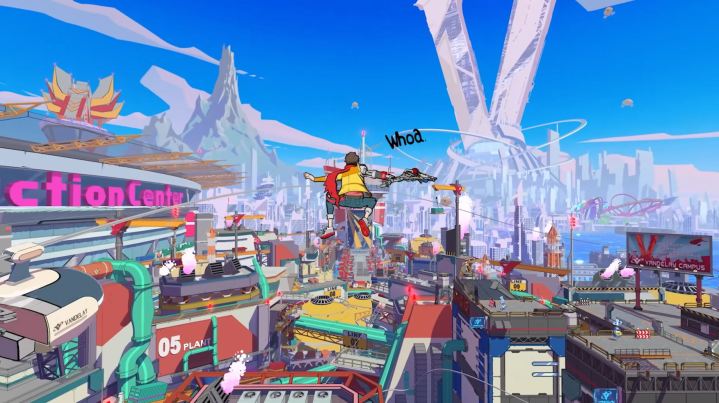
Throughout my playthrough, I often flashed again to the golden days of the Nintendo GameCube — a console that was loaded with the sort of eclectic video games that you simply’ll solely discover within the indie scene lately. I’m transported to enjoying Capcom’s Viewtiful Joe as a child, nonetheless impressed by how video games might provide such a various vary of play kinds and visuals that I’d by no means skilled earlier than. That’s slipped away from the large price range scene within the final decade as I’ve felt the largest releases homogenized across the identical common concepts. Reasonably than chasing bankable tendencies, Hello-Fi Rush prioritizes invention above all.
Whenever you’re making a AAA online game that’s going to be positioned as a serious console unique for an organization like Microsoft, that’s maybe essentially the most punk factor you could possibly do.
Enjoying with music
Hello-Fi Rush excels in a whole lot of areas, however its musical fight is its standout accomplishment. On paper, it’s your normal hack-and-slash the place gamers construct up huge combos (see: Bayonetta, Satan Could Cry, and so forth). The twist, although, is that gamers do extra harm if their assaults line up with the beat of the background music. Many video games have tried this lately to various levels of success. Metallic: Hellsinger, as an illustration, makes an attempt to show Doom right into a rhythmic shooter, however its restrictive beat-matching system leaves little room to experiment with the music.
That’s not the case right here as Tango Gameworks lays out a blueprint for others to comply with. Listed here are the fundamentals of battle: gamers can execute a lightweight assault that lasts one beat or a heavy assault that lasts two. By way of the sport, Chai learns a protracted record of combos that blend the 2 up, discouraging gamers from merely urgent X on each single beat. A profitable combo triggers a particular transfer which is executed by nailing a fast button timing occasion. If I wished to get higher rankings in battles, I’d must be taught the rhythmic nuances of every combo string and make use of them in battle like a guitarist pulling from their bag of tips.
In my finest battles, I really feel simply as very like a conductor as I do an motion hero.
I’ve by no means been a man who memorizes combo lists and fights with precision in video games like this; I simply grew to become that man in Hello-Fi Rush. That’s the brilliance of the music system right here. I’m not left attempting to recall complicated button strings on the fly. I do know what each one in every of my assaults sounds and looks like. The timing of every one leaves extra of an impression on me than a menu exhibiting me the buttons. It’s so impactful that I really feel prefer it’s going to vary the way in which I strategy the style any longer, treating assault strings as riffs.
That setup can be sufficient to depart me impressed, however Hello-Fi Rush goes far past that with out ruining its class. By the tip, Chai can carry out an evasive sprint, parry assaults, tether in the direction of an enemy, and summon companions to pepper in particular assaults. Each builds the soundscape as a lot because it provides complexity to battle. When gamers name in Peppermint, she’ll blast robots together with her laser pistols and break blue shields, including a singular little bit of syncopation for a couple of beats. I discovered myself utilizing my tether nearly like a be aware relaxation, permitting me to shortly refocus my consideration on an enemy earlier than firing up a brand new bar of assaults. The truth that I can simply juggle so many strikes by realizing how they play into the rhythm speaks volumes concerning the system’s energy. In my finest battles, I really feel simply as very like a conductor as I do an motion hero.

These concepts are constructed on additional with a contact of customization, as Chai should purchase and equip guitar picks to achieve passive boosts. It’s the one system I want I had extra time to mess around with. Gamers earn gears, the sport’s main forex, by exploring ranges, however bigger portions of them are earned by delivering achievements at a house base hub between missions. Since chapters are likely to go on for near an hour and don’t all the time finish in a return to the bottom, I discovered that I solely ever had a couple of alternatives to earn and money in these massive gear caches throughout my eight-hour playthrough. It’s a bit of strange pacing for a sport that’s in any other case so fast-paced.
Although I’ve principally centered on fight right here, rhythm is baked into each a part of Hello-Fi Rush. On-rail segments have Chai avoiding cargo crates by dodging aspect to aspect, bigger enemies could be completed off in a Simon Says parry minigame, and platforming between area battles requires some cautious timing. Even after I’m dashing round ranges in search of well being upgrades or collectible graffiti, I discover myself naturally dashing to the music, switching up my cadence only for the enjoyable of adjusting up my sound sample. Interactions like that make Hello-Fi Rush really feel like the final word rhythm sport, one which encourages me to play with the music it doesn’t matter what I’m doing.
Type and substance
Hello-Fi Rush instantly stands out for its cartoon artwork model, which completely pops on Xbox Sequence X. Vibrant colours, daring line work, and clean efficiency make it one of many best-looking video games on current-gen consoles, buying and selling in detailed realism for illustrative perfection. Although what’s extra spectacular than visible constancy is how practical its aesthetic decisions are.
I’m satisfied I might mute it and nonetheless keep on beat.
For example, each component of its ranges is painstakingly animated to groove alongside the soundtrack. Pistons pump on beat after I’m zooming via a manufacturing unit, whereas elevators drop to their vacation spot in a staggered rhythmic sample. Every little thing feels as if it’s dancing — and that’s not only for present. All of that acts as a pure visible indicator that retains gamers on the beat even once they’ve misplaced the music. Whereas a standard beat-matching immediate could be toggled on with the press of a button, I performed your entire sport with out it. I’m satisfied I might mute it and nonetheless keep on beat.
I wouldn’t dare do this although, because the soundtrack itself presents some mid-2000s delight. Along with an unique soundtrack of energetic rock tunes, Hello-Fi Rush contains some strong licensed music that’s thoughtfully built-in into battles. In a single standout battle, I am going toe-to-toe with a boss as a canopy of The Flaming Lips’ Free Radicals performs. I’m enjoying alongside to its main verse till I whittle down one phase of the well being bar. Immediately, the tune naturally transitions to its refrain, with the boss unleashing some new assaults and patterns to be taught. In a single part, the display locks to a 2D aircraft as she tosses pipes at me, every one including an additional guitar stab to the combo.
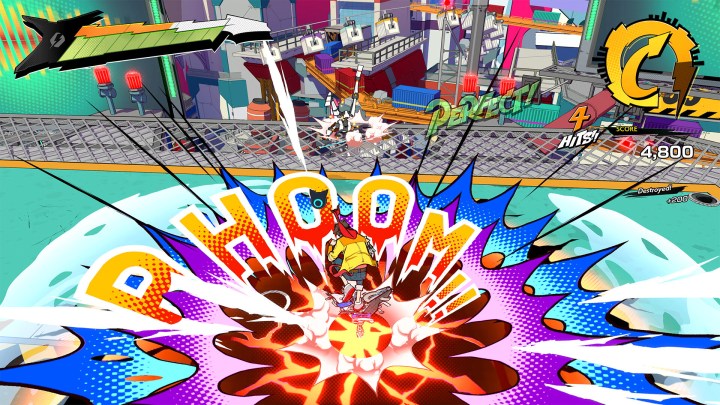
Mileage might fluctuate on the subject of the soundtrack. I think about some youthful gamers would possibly discover tunes like Zwan’s Actually or The Black Keys’ Lonely Boy not terribly indicative of the rebellious youth tradition the sport portrays. Even so, the music decisions are undeniably practical. They convey the suitable model of rock and roll vitality whereas giving Chai some sturdy foundations to jam over throughout battle. Positive, this 33-year-old critic’s ears perked up after I heard the primary notes of Fiona Apple’s Quick As You Can open a boss battle, nevertheless it makes for a tremendously thrilling battle theme even should you’re unfamiliar with it.
These left-field music decisions reinforce what makes Hello-Fi Rush work so effectively: There aren’t any compromises right here. It looks like an earnest piece of self-expression from Tango Gameworks, quite than a mission engineered for revenue. It feels just like the crew behind it’s banking on the hope that if it means one thing to them, then there can be an viewers that connects with it too.
If that’s the case, they’re proper. I’m that viewers and I haven’t been so gained over by a sport of this scale in a really very long time.
Hello-Fi Rush was reviewed on an Xbox Sequence X hooked as much as a TCL 6-Sequence R635.
Editors’ Suggestions