
The next article was initially printed on Sept. 8, 2023, by Chalkbeat, a nonprofit information group masking public schooling. Join their newsletters at ckbe.at/newsletters.
By Ameena Ghaffar-Kucher (Ed.D. ’08) and Deepa Iyar
Monday marks the twenty second anniversary of 9/11. Across the nation, individuals will bear in mind the unimaginable losses of that day with memorials, rallies, hashtags like #NeverForget, and acts of service. After which they may transfer on, relegating 9/11 to a one-dimensional and incomplete historic narrative that facilities the assaults and the rapid aftermath however neglects the long-term results of selections taken after that day.
This cycle of remembering and forgetting may be damaging for younger individuals, particularly those that didn’t stay by 9/11 or began college after it occurred. Given current assaults on how and what to show about U.S. historical past, coupled with rising acts of hate towards communities of shade, we should demand extra inclusive curriculums about 9/11 and its aftermath.
For each of us, what occurred after the 9/11 assaults catalyzed our analysis and instructing. For Ameena, it grounded her analysis with youth from Muslim immigrant communities within the U.S. and, ultimately, the creation of the curriculum Instructing Past September eleventh. Inspecting the 20 years after 9/11, the curriculum covers U.S. overseas and home coverage in addition to solidarity actions, media illustration, and Islamophobia. For Deepa, it led her to help South Asian non-profits and write a e book that paperwork the post-9/11 experiences of South Asian, Arab, Muslim, and Sikh immigrants in America.
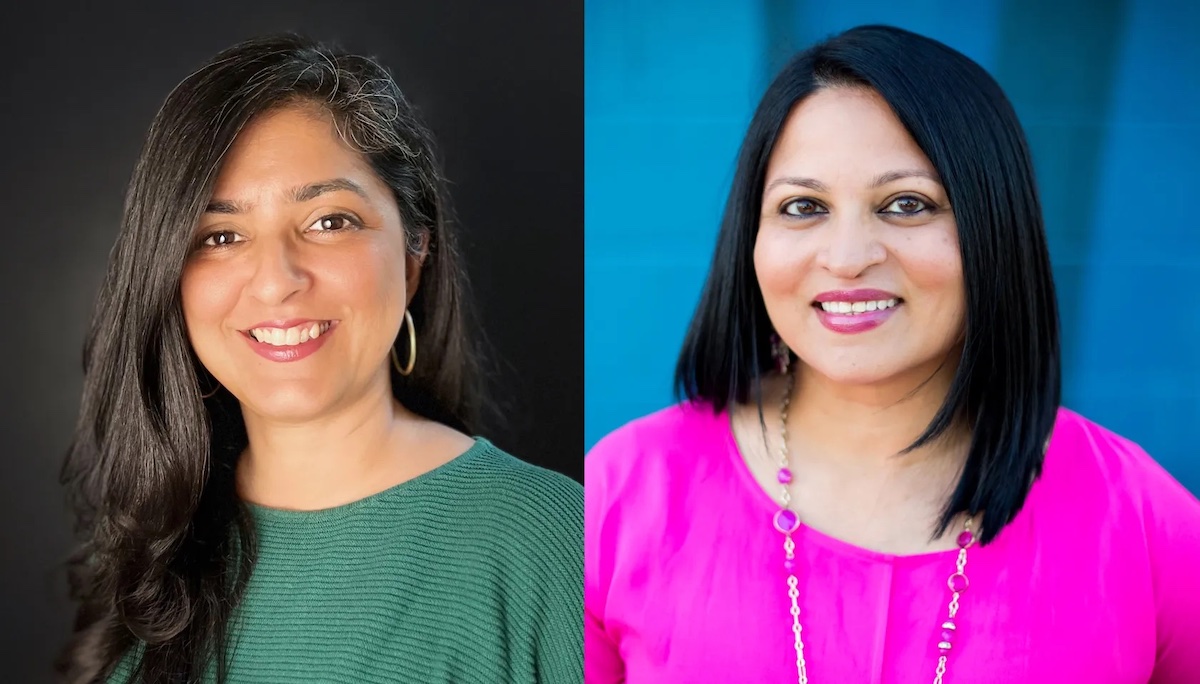
Ameena Ghaffar-Kucher (Ed.D. ’08), left, and Deepa Iyer.
At this time, we’re additionally dad and mom of Gen Z youngsters and have witnessed how restricted the dialog round 9/11 is, significantly in public faculties. A lot of this dialog focuses on what unfolded on that horrible Tuesday. Not often do college students study the devastating aftermath on communities who’ve borne the brunt of insurance policies that adopted within the title of nationwide safety or the roughly 432,000 civilian victims of direct battle violence within the international battle on terror.
It’s changing into clearer with every passing 12 months that U.S. college students are receiving partial, time-limited, and de-contextualized histories and views a couple of watershed second in historical past. In accordance with a 2017 audit, solely 26 states embody 9/11 and the next battle on terror in public college curriculums. The place and when it’s taught, the emphasis is usually on nationwide safety with scant point out of the results of Islamophobia, restrictions to civil liberties, or the huge human prices of army interventions.
For Gen Z, 9/11 and its aftermath is probably akin to how our era, Gen X, perceived the Vietnam Battle. Most of us didn’t stay by that point, and our classes decreased it to a darkish interval of U.S. historical past disconnected from the current. Figuring out in regards to the prices of the wars in Southeast Asia, their affect on the worldwide anti-war motion, and the remedy of refugees would have supplied us with a significant lens to guage U.S. coverage.
Equally, understanding how the world modified after 9/11 will higher put together Gen Z to guage coverage, perceive present occasions, and kind significant connections with members of the communities impacted by the backlash to the assaults. It is going to assist them assess the current U.S. withdrawal from Afghanistan, the remedy of Afghan refugees, and the cynical use of anti-Muslim election rhetoric.
Social research content material about 9/11 ought to train in regards to the backlash perpetrated towards Arabs, Muslims, Sikhs, and South Asians within the U.S. by fellow Individuals and, later, by the state itself by authorities surveillance and profiling.
American historical past courses ought to probe how the U.S. immigration and nationwide safety infrastructure modified with the creation of the federal Division of Homeland Safety. College students ought to find out how the battle on terror didn’t simply embody wars in Afghanistan and Iraq, but additionally subsequent counterterror actions in 85 nations.
Those that wish to perceive the fuller historical past have entry to tales, case research, voices of younger activists, analysis, and documentation. These assets are prone to spark discussions about such subjects because the psychological well being penalties of Islamophobia and the results of home insurance policies on working-class communities.
Nonetheless, our classroom amnesia round 9/11 may worsen, given the assaults on instructing and studying in regards to the histories of individuals of shade. Nevertheless it’s essential that college students not obtain watered-down historic info, be it about Black historical past in America or the 9/11 terror assaults and what adopted.
Now, 22 years on, we have now yet one more alternative to offer college students with a fancy and multi-layered understanding of 9/11. Now we have the possibility to show in ways in which uplift historic accuracy and complicated views for younger individuals. Our kids deserve no much less.
Ameena Ghaffar-Kucher, EdD, is a Senior Lecturer on the College of Pennsylvania’s Graduate College of Schooling. She is the challenge director and curriculum lead for the Instructing Past September eleventh curriculum challenge.
Deepa Iyer works on solidarity and social actions on the Constructing Motion Venture. Her e book, ”We Too Sing America”, paperwork histories of South Asian, Muslim, Sikh and Muslim immigrants within the wake of 9/11.