
Curiosity in handheld gaming consoles has erupted over the past couple of years due to the Steam Deck’s thrilling launch again in 2022.
The hand held market is booming, with a number of consoles coming to gentle this 12 months. Not solely do we have now the Lenovo Legion Go to stay up for, however the PlayStation Portal console can even be available for purchase someday in October.
The Lenovo Legion Go handheld console is predicted to be obtainable ranging from November 2023 and has a £699/$699/€799 beginning worth. The Asus ROG Ally is already obtainable for buy, with the identical beginning worth of £699/$699.
With all these new units cropping up, we wished to look nearer on the soon-to-be-released Lenovo Legion Go and see the way it compares to the Asus ROG Ally. Preserve studying to seek out out all the important thing variations – and similarities – between these two handhelds so you may select the one which fits you finest.
Lenovo Legion Go has removable controllers
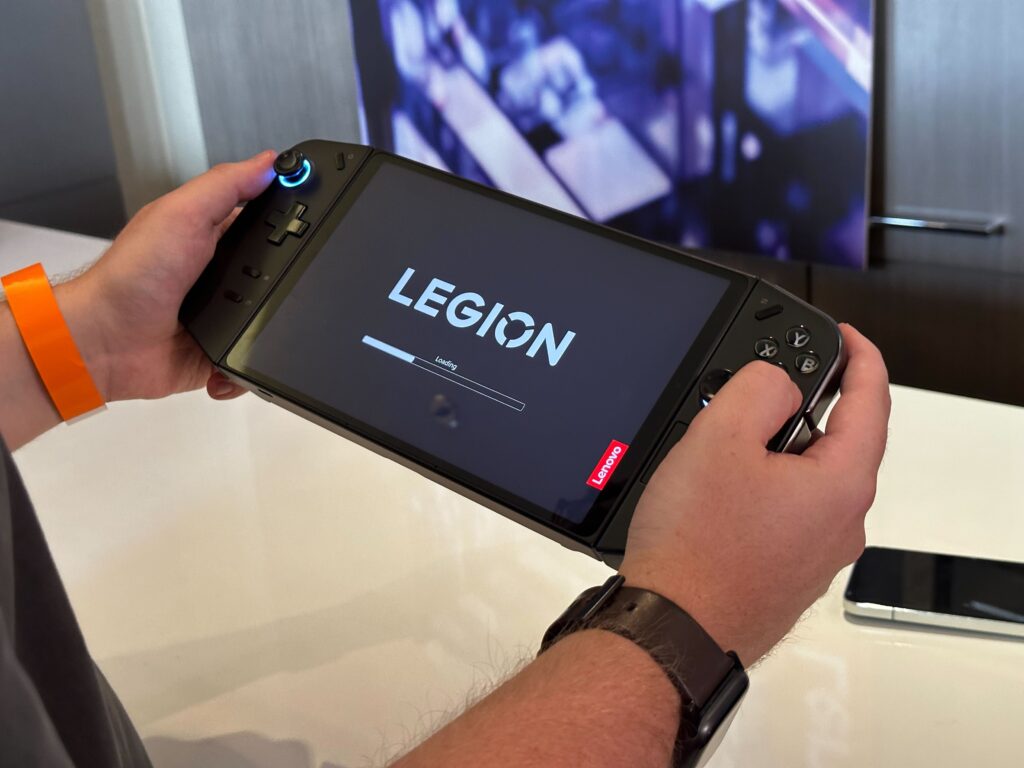
The obvious distinction between the 2 handheld techniques is that Lenovo has removable controllers, together with a kickstand on the rear. This lets you prop up the Legion Go on a desk, and nonetheless maintain the controllers in your hand.
This will increase the flexibility of Lenovo’s new gadget, permitting you to make use of it like a Nintendo Swap. We think about this may additionally mean you can hook the Legino Go as much as a TV, whereas sitting in your couch with the removable controllers in hand.
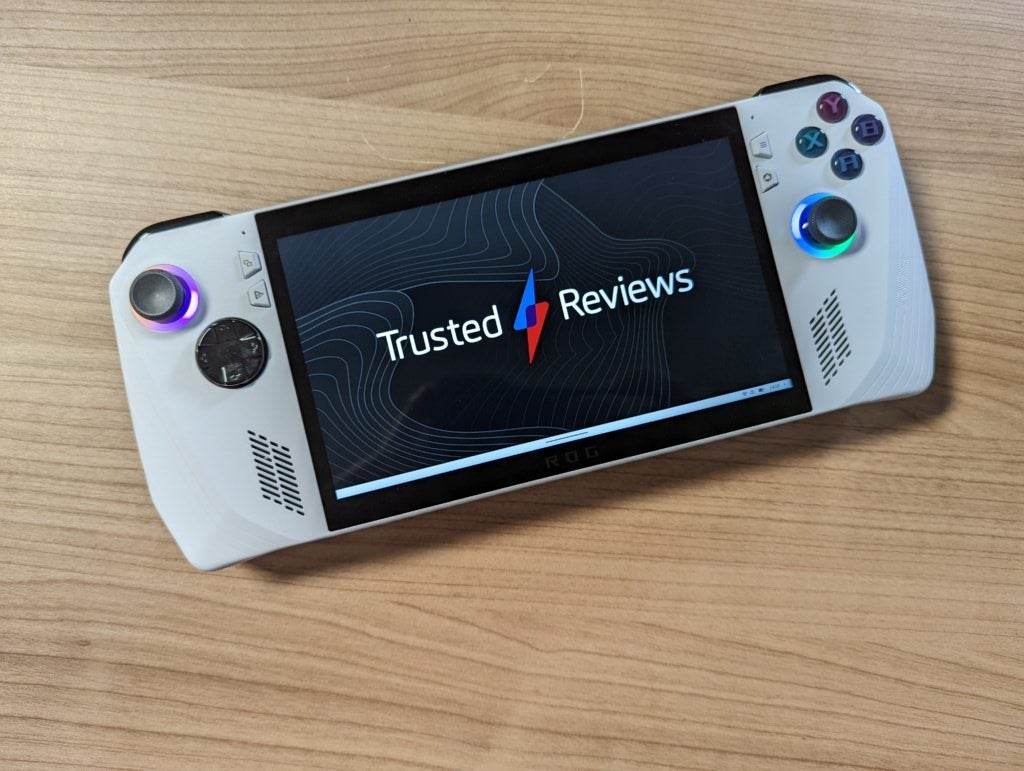
In the meantime, the Asus ROG Ally has its controllers mounted into the moveable, and so are usually not detachable. This limits the variety of methods you should utilize the gaming handheld in comparison with the Legion Go.

Lenovo Legion Go has a bigger display
The Lenovo Legion Go comes with a powerful 8.8-inch show with a Quad HD+ (2560×1600) decision and 144Hz refresh fee. It has a quoted brightness of 500 nits in addition to 10-point touchscreen capabilities.
We didn’t get the possibility to really push the bounds of the Legion Go, however the QHD+ panel was noticeably extra vibrant and detailed than a Full HD show. Colors appeared appropriately correct and wealthy and the dimensions didn’t really feel overly imposing throughout our playtime.
Compared, the Asus ROG Ally comes with a much less alluring setup on paper. It comes with a 7-inch FHD (1920×1080) show alongside a 120Hz refresh fee with a quoted brightness of 500 nits. The smaller display, decrease decision and decrease refresh fee imply that the ROG Ally could also be much less immersive in comparison with the Legion Go.
We did discover that darker imagery wasn’t displayed very properly in some cases, with our reviewer needing to squint to see any element in some sections of Horizon Zero Daybreak. Returnal had the identical situation, suggesting that the Legion Go could also be the most suitable choice for these after probably the most participating visible expertise.
Extra storage on the Legion Go
When it comes to configurations, the Legion Go might be discovered with 16GB LPDDR5X RAM with 256GB, 512GB or 1TB of PCIe 4.0 storage, with the choice to increase as much as 2TB. Apparently, within the UK just one mannequin might be offered, with its specs hitting 16GB RAM and 512GB SSD.
Asus determined to equipment out the ROG Ally with 16GB LPDDR5 RAM alongside 512GB PCIe 4.0 storage. Relying in your area, you might be able to benefit from the excessive storage on the Legion Go, nevertheless, 512GB ought to nonetheless be affordable sufficient for many avid gamers for a minimum of a couple of months.
Each include the identical Ryzen Z1 Excessive processor
Each of those handheld PCs come filled with the identical processor, the AMD Ryzen Z1 Excessive, in addition to AMD RNDA 3 Graphics. It’s value noting that the Legion Go comes with “as much as” the Ryzen Z1 Excessive processor, that means that much less highly effective variations ought to be obtainable when it launches.
This chipset makes each of those consoles extra highly effective than the Steam Deck. In our exams, we discovered that the ROG Ally was capable of hit 46fps in Horizon Zero Daybreak at 720p with Turbo Mode activated, hitting 85fps in Filth Rally with the identical settings enabled. Turning on Turbo Mode and tinkering with the graphical settings can present enormous efficiency boosts to the ROG Ally, making it an amazing selection for triple-A avid gamers.
We are able to’t say how the Legion Go will evaluate till we get the possibility to try it out in full, however we will count on it to attain equally due to their matching internals.
Smaller battery on the ROG Ally
The battery lifetime of a handheld console is essential, as you need to be sure that it has sufficient energy to play your favorite video games on the go, however sufficient endurance that it will probably deal with a multiple-hour play session.
The ROG Ally comes with a 40WHr battery, whereas Lenovo opted to pack the Legion Go together with a 49.2WHr battery. Sadly, we discovered that the ROG Ally may solely final round 90 minutes with AAA video games. Horizon Zero Daybreak in Efficiency Mode lasted for one hour and half-hour earlier than needing to be recharged, placing it at the same endurance to the Steam Deck.
For the reason that Legion Go does include a bigger battery cell, we will hope that it’s going to final just a little longer throughout intensive play classes. That stated, the bigger display and better decision could make the moveable much less energy environment friendly, so it’s troublesome to know which gadget has the most effective battery life at this early stage.